Modern data centers are increasingly adopting liquid cooling infrastructure to support AI workloads, GPU clusters, and high-density computing environments. These cooling systems rely on precise coolant flow to maintain safe operating temperatures and protect critical hardware.
Valves play an essential role in these systems, helping regulate coolant flow, isolate equipment for maintenance, and maintain stable system pressure.
JFlow provides high-performance industrial valves designed for reliable operation in cooling infrastructure, including chilled water systems, cooling distribution units (CDUs), and liquid cooling loops used in modern data centers.
High-density computing environments generate significant heat, especially in AI and machine learning applications. To manage these thermal loads, many facilities now rely on liquid cooling systems, which remove heat far more efficiently than traditional air cooling methods.
Typical components of a liquid cooling system include:
• Cooling distribution units (CDUs)
• Heat exchangers
• Pumps and circulation loops
• Chilled water infrastructure
• Flow control valves and isolation valves
Within these systems, valves help maintain stable coolant flow, safe operating pressure, and reliable system control.
Because data centers operate continuously, valve reliability is critical to maintaining consistent cooling performance.
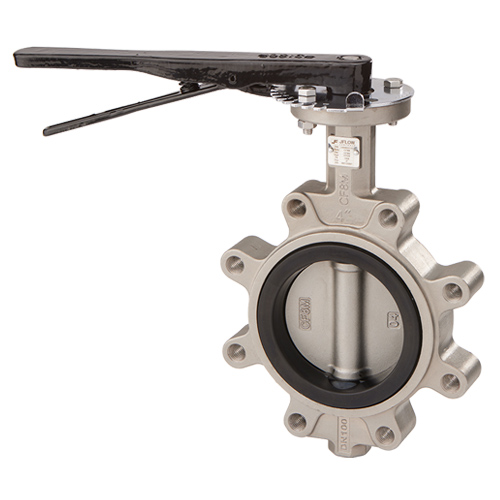
The JFlow Series 85A High Performance Butterfly Valve provides reliable flow control and shutoff for industrial fluid systems, including chilled water and cooling infrastructure used in data centers.
Butterfly valves are commonly used in cooling systems because they provide efficient flow control while maintaining a compact installation footprint.
• Reliable shutoff performance
• Low torque operation
• Compact installation design
• Durable construction for high-cycle environments
• Compatible with automated actuation systems
These characteristics make the Series 85A well suited for cooling distribution systems, chilled water loops, and thermal management infrastructure.
Butterfly valves are widely used in cooling infrastructure, but engineers must consider several factors when selecting the right valve for the application.
In cooling systems that cycle frequently, valve seats can experience wear over time. Lower-quality valves may develop leakage as sealing surfaces degrade.
High-performance butterfly valves use durable seat materials and precision machining to maintain reliable shutoff.
Cooling systems rely on stable fluid circulation to maintain consistent temperature control. Excessive pressure drop across valves can increase pump load and reduce system efficiency.
Proper valve sizing and high-performance valve designs help maintain efficient flow conditions.
Turbulence and unstable flow conditions can reduce cooling system efficiency and place stress on system components.
Selecting valves designed for stable operation in continuous flow environments helps maintain consistent coolant circulation.
Modern cooling systems often integrate with building management systems (BMS) and automated controls. Valves must operate reliably with electric or pneumatic actuators used in automated cooling infrastructure.
Cooling infrastructure in modern data centers demands consistent performance, long service life, and reliable operation. JFlow valves are engineered to perform in demanding industrial environments where dependable fluid control is essential.
• Proven industrial valve engineering
• Durable materials and precision construction
• Reliable shutoff and flow control
• Compact designs for mechanical system installations
• Compatibility with automated control systems
These characteristics make JFlow valves well suited for liquid cooling systems supporting AI infrastructure and high-density computing environments.
Liquid cooling systems commonly use butterfly valves, ball valves, check valves, and pressure control valves to regulate coolant flow and isolate portions of the cooling loop.
A Cooling Distribution Unit (CDU) regulates coolant flow between facility water systems and rack-level cooling equipment used to remove heat from servers.
Butterfly valves provide efficient flow control with a compact footprint. This makes them ideal for chilled water systems and cooling distribution infrastructure.
Cooling systems operate continuously. Valve failures can interrupt coolant flow, which may lead to equipment overheating and system downtime.
Liquid cooling systems circulate coolant through cold plates or heat exchangers that remove heat from servers. The heated coolant is then returned to heat exchangers or facility chillers where the heat is removed before recirculation.
Monday - Friday 8 a.m. to 5 p.m. EST
513-731-2900
Get in Touch
Let us know how we can help with your valve specification or application
4665 Interstate Drive
Cincinnati, OH 45246
We use cookies to improve your experience, analyze traffic, and support marketing. You can accept all, reject non-essential cookies, or customize your choices.
California users can reject marketing cookies to opt out of sale/share or targeted advertising.